

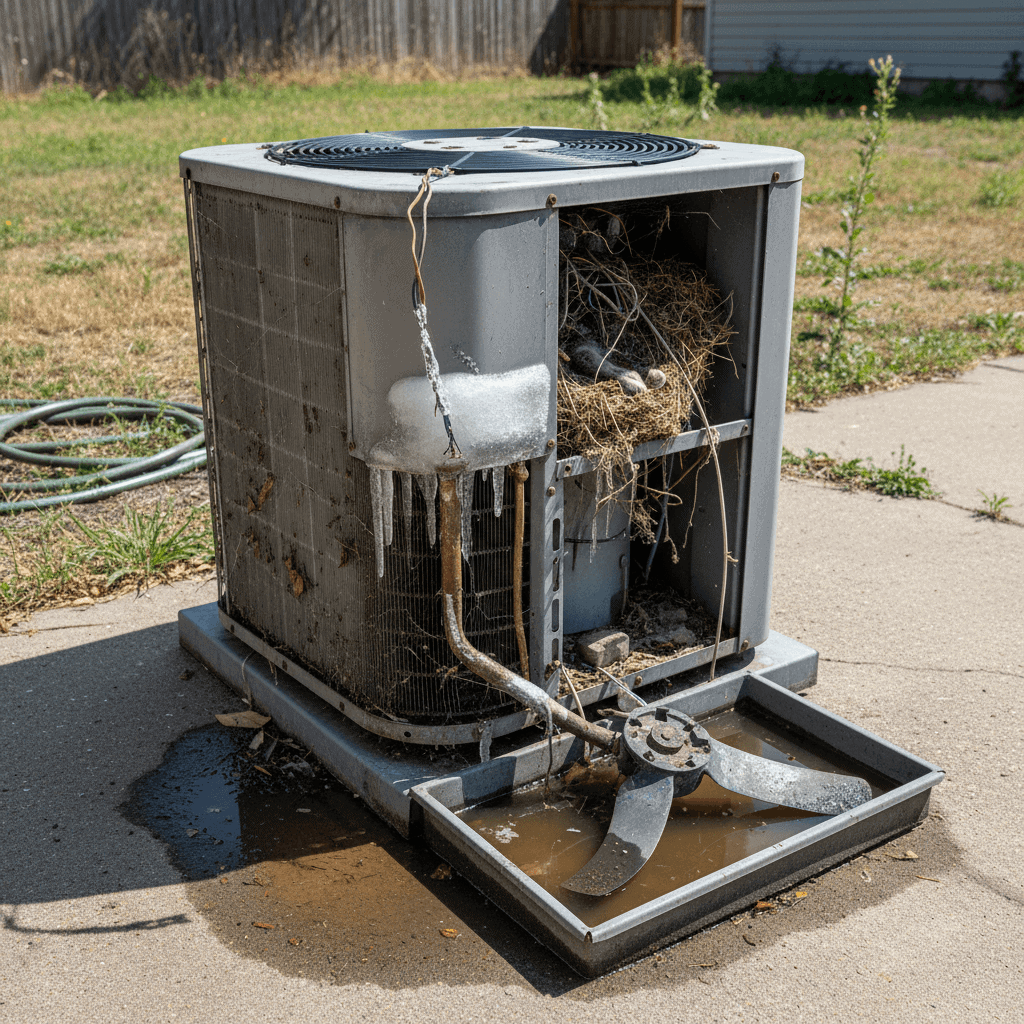
When an air conditioning system stops working right in the middle of a hot day it feels urgent. In many homes the AC is the difference between a comfortable evening and a night of restless heat. Knowing the common reasons why AC systems stop working helps you act quickly and avoid higher repair bills.
This article explains the most frequent causes of system failure in plain language. You will get practical troubleshooting steps, examples from real repair calls, and clear tips for prolonging equipment life. If at the end you prefer a professional checkup there is a link to a trusted local service.
Electrical problems that cause AC shutdowns
Many AC failures begin with electrical issues. Power is the foundation of all system functions so even small faults can stop the entire unit.
Tripped breakers and blown fuses
A common pattern is a breaker that trips after the compressor starts. This may mean the unit is drawing more current than the circuit can handle. Resetting the breaker can bring the system back on temporarily but repeated trips point to a deeper issue.
- Signs to watch for include a breaker that trips every time the AC cycles and visible scorch marks in the panel.
- Example scenario. A homeowner resets a breaker three times in a day then calls a technician. The underlying cause was a failing compressor motor that drew excess current when hot.
Wiring problems and relay failures
Loose wiring, corroded terminals, or a failing contactor can interrupt power at critical moments. A unit that hums but will not start often has a bad contactor or capacitor.
- Regular inspections can reveal loose connections before they fail completely.
- Professional repair is required if wires are damaged or if the contactor must be replaced.
Refrigerant problems and leaks
Refrigerant is the working fluid that moves heat out of your home. If levels are low or a leak is present the system cannot cool effectively.
- Symptoms include reduced cooling, iced evaporator coils, and a system that runs constantly without reaching set temperature.
- An odor near the outdoor unit or oily residue on pipes can indicate a refrigerant leak.
Handling refrigerant requires training and special tools. Modern refrigerants are regulated and require recovery during service. A certified technician can locate and repair leaks, then recharge the system to the correct level.
Mechanical failures and worn components
Over time moving parts wear down. Bearings, fan motors, compressors, and belts face friction and heat that reduce reliability.
Compressor failure
The compressor is the heart of the outdoor unit. When it fails the system stops producing cold air. Failure can occur due to age, overheating, or lack of lubrication in older designs.
- Stiff startup, loud noises, or a unit that will not start are common signs of compressor trouble.
- Replacing a compressor can be costly so technicians evaluate repair versus replacement based on system age and condition.
Fan motors and blower issues
Both the indoor blower and the outdoor fan must operate smoothly. If either motor seizes or the blades become unbalanced the unit will not move air properly and will overheat.
- Vibration, grinding sounds, or drastically reduced airflow suggest motor problems.
- Cleaning and lubrication sometimes restore function, but burnt windings require motor replacement.
Poor maintenance and dirty filters
Some of the easiest problems to prevent come from neglect. Clogged filters and dirty coils reduce airflow and heat transfer so the system works harder and less effectively.
- Replace or clean disposable filters every 1 to 3 months depending on use and pets.
- Dirty evaporator or condenser coils cause higher pressures and longer run times which shorten component life.
Example. A family noticed weak cooling and higher electricity bills. A simple coil cleaning and filter change restored normal performance and cut energy use back down.
Thermostat and control issues
The thermostat is the user interface for your cooling system. If it is miscalibrated or has wiring faults the AC may not receive the correct commands.
- Symptoms include incorrect temperature reading, frequent cycling, or a system that will not respond to set point changes.
- Replacing old mechanical thermostats with modern digital models improves accuracy and can reduce cycling problems.
Before replacing the thermostat check batteries and settings. If the thermostat is hardwired a technician can test the control signals to confirm whether the thermostat or the HVAC control board is at fault.
Drainage and condensation problems that stop operation
Air conditioners extract humidity from indoor air. That moisture needs a clear path out of the house. When drains clog condensate can back up into the system and trigger safety switches.
- Blocked drain lines cause water stains, indoor humidity issues, and sometimes mold growth near the indoor unit.
- Modern systems include a float switch that shuts the system off if water reaches the drain pan to avoid overflow.
Regularly flush the condensate drain with a mild cleaner or have a technician treat it during a tune up. This is one of the most cost effective maintenance items for preventing unexpected shutdowns.
Practical troubleshooting steps homeowners can try
Before calling a technician use a few quick checks to identify obvious faults.
- Check the thermostat setting and replace batteries if needed.
- Inspect the indoor filter and replace if dirty.
- Look at the circuit breaker panel and reset any tripped breakers after ensuring it is safe to do so.
- Clear debris around the outdoor unit to restore airflow.
- Check for visible ice on the evaporator coils. If present turn the system off and let it thaw then run the fan to dry the coils.
If these simple steps do not restore cooling the problem may involve refrigerant, the compressor, or electrical parts that require a trained technician to diagnose and repair.
When professional service is the best choice
Some repairs are suitable for a DIY approach while others call for professional intervention. If the issue involves refrigerant, compressor replacement, or persistent electrical faults do not attempt repairs without the right tools and licensing.
For safe and correct service contact a local experienced AC repair team that can evaluate the system, provide written estimates, and perform repairs that meet local codes. An in person diagnosis often uncovers multiple contributing factors such as weak refrigerant charge combined with a failing capacitor.
- Call a professional if you smell burned insulation, see oil on refrigerant lines, or hear loud knocks from the compressor.
- Ask for a written diagnosis and an itemized estimate so you can compare repair to replacement costs.
Preventive tips that reduce the chance of failure
Most unexpected breakdowns are avoidable with a few routine actions. Regular attention can extend system life and lower monthly energy spend.
- Set a calendar reminder for filter changes and coil inspections.
- Schedule a professional tune up before the cooling season to check refrigerant levels, test electrical components, and clean coils.
- Maintain clear airflow around the outdoor unit and trim vegetation back several feet.
- Use a programmable thermostat to limit run time when the house is empty.
Simple record keeping helps. Note dates of service visits and component replacements. These records help a technician spot patterns and advise when replacement is more cost effective than ongoing repairs.
Stopping AC failures often comes down to timely observation and the right reaction. Start with basic checks like filters and breakers while watching for signs such as odd noises, frequent cycling, or poor airflow. If the problem points to refrigerant, compressor, or significant electrical faults arrange a professional visit. Proactive maintenance reduces the chance of mid-summer breakdowns and keeps energy use lower.
Take action now. Schedule a maintenance visit or get a diagnostic inspection if your system shows any warning signs. Early attention to small issues saves time and money and keeps your home comfortable throughout the cooling season.